Say whether an area seems in use.
Whether a defined area appears occupied, within conditions we have actually tested.
In development
Morfus Sensing · In development
Morfus Sensing is something we are building. The idea: small dedicated devices in a room work out whether the area is being used, without a camera and without identifying anyone. It is meant to work on its own as well as feeding the other Morfus modules. It is in development — you cannot buy it today.
How it works
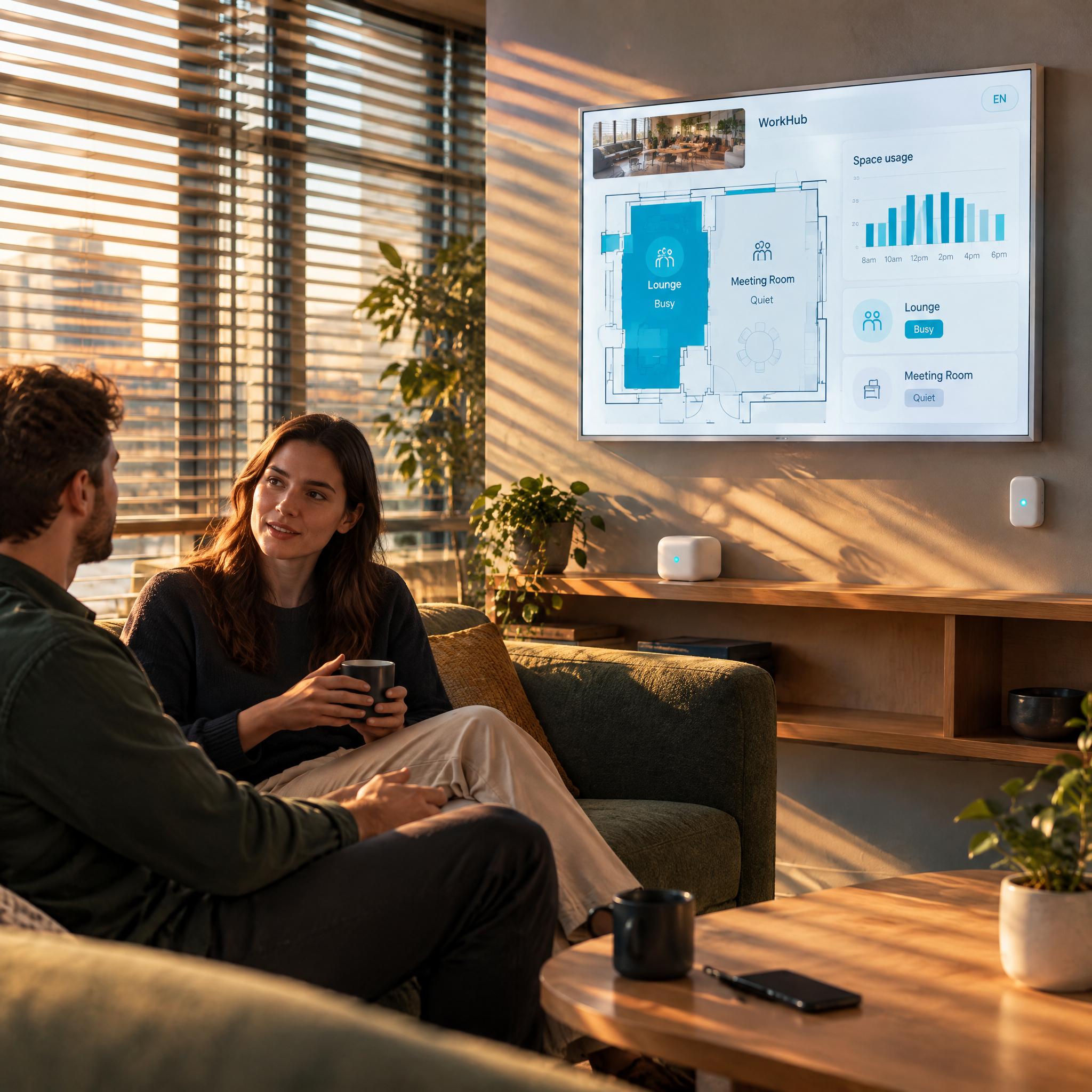
Small devices watch for changes in the radio signal across a defined area. Those changes get interpreted into a simple statement about that area, which can then reach a screen or a workflow.
Small dedicated devices are placed to cover an area you have defined. These are new devices — this is not an upgrade to the Wi-Fi access points you already have.
The system measures changes in the signal and turns them into a statement about the area — never about a named person.
Meeting room
Meeting room
About the area, never a person
In development. Nothing here is a tested result.
It reaches a screen or a workflow. Exactly how it connects, and how well it performs, is still to be settled.
No camera does not automatically mean no personal data. What gets collected, how long it is kept and who can see it still have to be decided for each deployment. We would rather say that plainly than let the words camera-free do the work.
The operating principle
Radio signals change as they cross a room and meet people and objects. The idea is to measure those changes and work out something simple about the area — whether it seems to be in use. How well that works in practice depends on the hardware, where it is installed, what the room is like, and testing we have not finished.
This explains how we intend it to work. It is not a performance claim about a tested system. Where the processing happens, and how the devices are powered and networked, are engineering decisions we have not fixed — so do not read this as a claim that it all happens on the device, or all in the cloud.
What it does
Whether a defined area appears occupied, within conditions we have actually tested.
Patterns of use across the day and the week. A pattern is not an exact headcount, and we will not present it as one.
Broader movement or activity patterns where testing supports it. Following individuals, reading gestures and identifying people are not on this list, and are not planned.
Make the result available to a screen or a workflow. How that connects is still to be settled.
Use cases
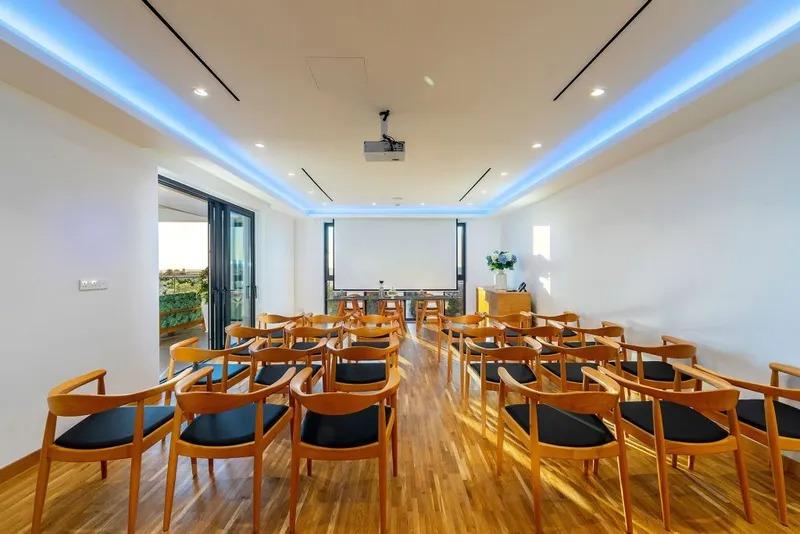
A meeting or community room shown as in use or free, so a manager can see whether it earns the space it takes up. Installation and how well it detects things both still need testing.

A waiting area across different times of day, described in rough terms rather than invented numbers. Meant for planning staffing. Not for anything safety-critical, and not a crowd-counting system.
The observation reaches a property rule or a member of staff, who then decides. The observation does not act on its own — a separate permission check sits in between.
Tell us what you operate and what you want to improve. We will scope the knowledge, actions and connections your deployment would need.